Using Drawing to Inform the Design Process
Hand drawing remains a fundamental part of how we think through projects in the studio. Alongside digital tools, drawing provides a direct and immediate way to test ideas before they become defined or constrained by scale, software, or technical resolution.
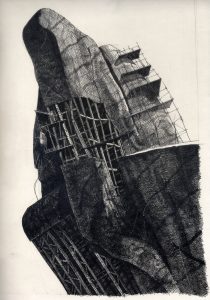
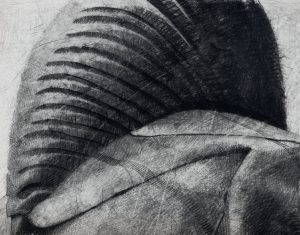
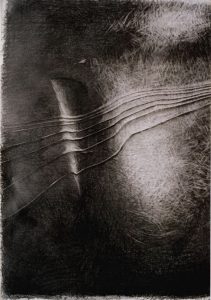
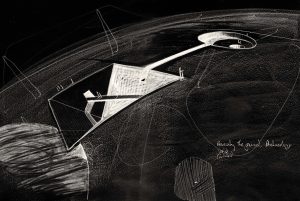
The drawings shared here were produced as part of the Egyptian Museum competition. They are not proposals or formal studies, but exploratory sketches used to investigate the expression and movement of cloth across sculptural forms. The aim was not to describe a building literally, but to understand qualities of mass, depth, shadow, and flow that could later inform architectural thinking.
Working in this way allows ideas to emerge naturally. Line weight, repetition, and rhythm become tools for exploring proportion, enclosure, and light without the pressure of arriving at a finished solution. This early stage of drawing is intentionally open-ended. It creates space to test instincts and spatial relationships before they are fixed.
Although these drawings are imaginative, they are closely connected to architectural concerns. They allow us to explore form and atmosphere at a subconscious level, which often proves valuable when a project moves into more structured stages of design. When we later develop schemes through CAD, BIM, and technical detailing, the influence of this early work often carries through in more measured and practical ways.
In an industry that relies heavily on efficiency and digital workflows, hand drawing offers an important counterbalance. It slows the process down, encourages reflection, and helps us maintain a clear connection between idea and outcome.
These drawings are not about a single project or result. They reflect how we think, test, and develop ideas — and how drawing continues to shape our approach to architectural design.